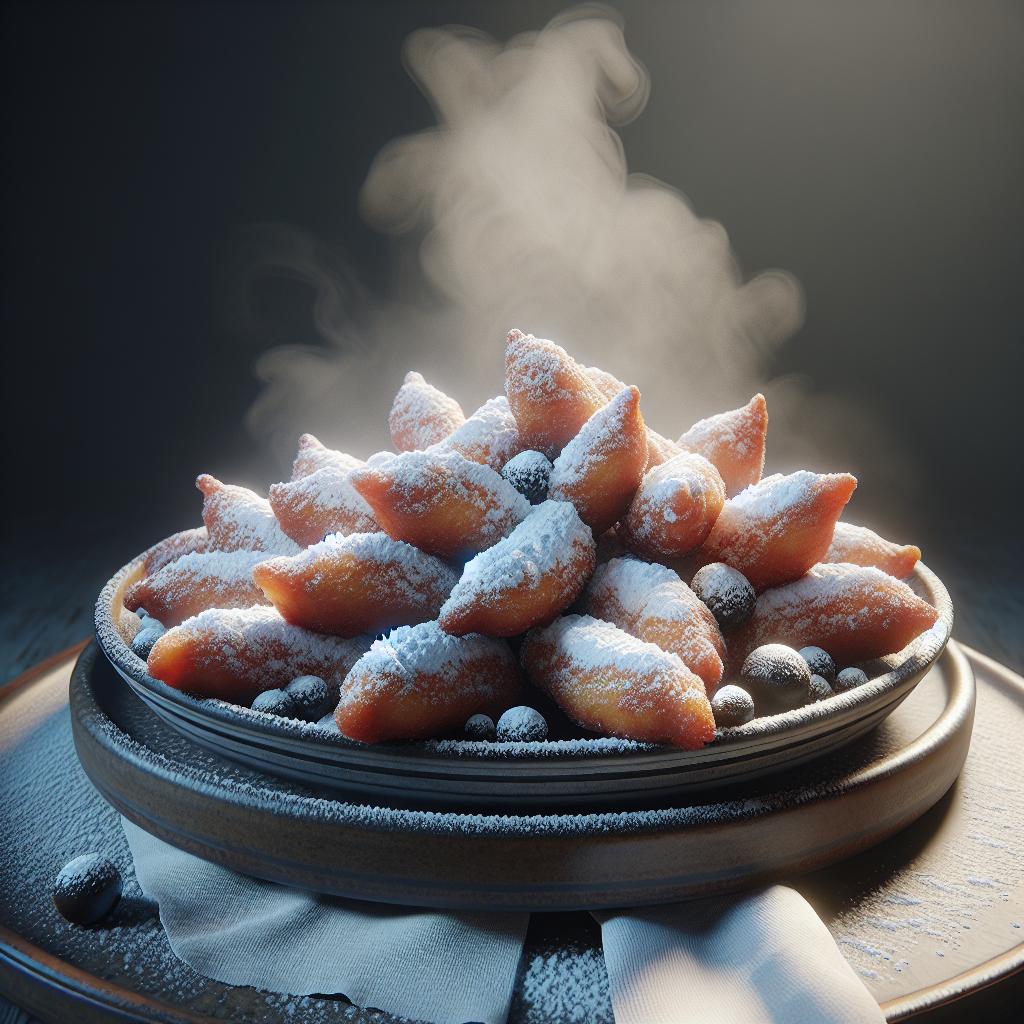
Cenci
17/11/2023Cenci are a typical dessert from the Carnival period in Italy, also known by other names such as chiacchiere, frappe, or bugie depending on the region. They are light and crunchy fritters, dusted with powdered sugar. Here is the recipe to make cenci:
Ingredients
- 250 g 00 flour
- 50 g sugar
- 50 g melted butter
- 2 medium eggs
- 1 pinch of salt
- 1 tablespoon of liquor, such as vin santo or rum
- Grated zest of 1 lemon (optional)
- Oil for frying (olive or seed oil depending on preference)
- Powdered sugar for garnish
Preparation
- In a large bowl, sift the flour and make a well in the center.
- Add the sugar, melted butter, eggs, pinch of salt, and chosen liquor. If desired, you can also add the grated lemon zest to flavor the dough.
- Work the ingredients with your hands or with the help of a mixer until you obtain a smooth and homogeneous dough.
- Cover the dough with a clean cloth and let it rest for about 30 minutes at room temperature.
- On a lightly floured surface, roll out the dough with a rolling pin until it reaches a thickness of about 2-3 mm.
- Using a fluted wheel or a sharp knife, cut the dough into strips about 3-4 cm long and wide, then cut these strips into rectangles or diamonds. You can also make cuts inside each piece to give the classic cenci shape.
- Heat plenty of oil in a wide pan and, when it reaches the right temperature (180° C), immerse the cenci a few at a time. Fry them until they become golden and crunchy.
- Drain them with a slotted spoon and place them on paper towels to remove excess oil.
- Once cooled, dust them with powdered sugar.
Remember to be careful during frying and not to overlap the cenci in the oil to prevent them from sticking together.
Trivia
The name “cenci” in Italian means rags or scraps, which recalls the irregular and jagged appearance of these sweets, as if they were pieces of torn fabric. This dessert has its roots in the Italian culinary tradition linked to the celebrations and feasts of Carnival, a period when all those food pleasures were once allowed, only to be forbidden during Lent.